
Our Blog

Fetaured Blog

Learn about our latest news from blog.

Follow our latest news and thoughts which focuses exclusively on design, art, vintage, and also work updates.

Pink flamingos feeding in Kuwait's coastal wetlands at sunset, with Kuwait Towers and the city skyline in the background.
Uncategorized

Flamingo Season in Kuwait: Best Time & Where to See Them

Flamingo Season in Kuwait: Best Time, Places to See Flamingos and Birdwatching Guide Discover Kuwait’s beautiful migratory flamingos, the best viewing season, important coastal wetlands and the best places to enjoy birdwatching. Every year, Kuwait’s coastline welcomes beautiful flocks of pink flamingos. As the weather becomes cooler, these elegant migratory birds arrive along the country’s shallow shores, mudflats and wetlands, creating one of the most impressive wildlife sights in Kuwait. From Kuwait Bay and Sulaibikhat Beach to Jahra Nature Reserve, flamingos have become an iconic part of Kuwait’s winter birdwatching season. Their arrival also highlights the importance of protecting the country’s coastal ecosystems and natural habitats. Greater Flamingos in Kuwait Bay at sunset. Photograph by هويج محمود هويج, Wikimedia Commons, image source, licensed under CC BY-SA 4.0. Quick facts about flamingo season in Kuwait Arrival: Usually from August onwards. Best viewing period: Autumn and winter. Common species: Greater Flamingo. Important locations: Kuwait Bay, Sulaibikhat Beach, Shuwaikh coast and Jahra Nature Reserve. Typical seasonal departure: Around March or April, although timing varies. 1. When Is Flamingo Season in Kuwait? Flamingos are most commonly seen in Kuwait during the cooler months. Their seasonal arrival generally begins around August, with more birds appearing


Read More »
kuwait-area-names-and-meanings.webp
Uncategorized

Kuwait Area Names and Their Meanings: 8 Places Explained

Kuwait Area Names and Their Meanings: 8 Places Explained Discover the stories behind eight Kuwaiti areas, their Arabic names, and the landscapes and traditions associated with them. Kuwait’s place names preserve stories about coastal life, desert plants, hills and waterways. Some origins have several interpretations, so the explanations below distinguish commonly reported meanings from confirmed historical facts. In this article Bneid Al-Gar — بنيد القار Mahboula — المهبولة Rumaithiya — الرميثية Fahaheel — الفحيحيل Mangaf — المنقف Shuaiba — الشعيبة Qurain — القرين Khairan — الخيران 1. Bneid Al-Gar (بنيد القار) — Small Port of Tar One explanation connects Bneid Al-Gar with a small harbour and tar. Bunaydar is associated with a small port, while qar refers to tar or pitch. The name has also been linked to oily or tar-like deposits along Kuwait’s coast. Meaning commonly reported: Small port associated with tar. Image source: Kuwait Tourist Enterprises Company · Place-name reference 2. Mahboula (المهبولة) — Local Stories Behind the Name Mahboula is a coastal residential area in southern Kuwait. Different explanations have been offered for its name, including stories connected with the local landscape and the way rainwater once moved through the area. Because these explanations differ, it is

Read More »
Kuwaiti family names and the traditional occupations of water carriers, boatbuilders, cotton workers and bakers
Uncategorized

Kuwaiti Family Names and the Stories Behind Them

Kuwaiti Family Names: 4 Traditional Jobs Behind Their History Your family name could tell a story about Kuwait’s past. From water carriers and traditional boatbuilders to cotton workers and bakers, familiar surnames can preserve clues about the occupations that helped communities survive and grow. Al-Kandari, Al-Qallaf, Al-Qattan and Al-Khabbaz are examples of names traditionally associated with particular types of work. Their stories offer a glimpse into everyday life in old Kuwait, when water had to be delivered, wooden boats were built by hand, cotton was prepared for bedding, and bread was made for local communities. A surname alone cannot prove a family’s ancestry or occupation. Individual family histories can differ, even when people share the same surname. Historical context for Kuwait’s traditional occupations. Source: Kuwait Times. 1. Al-Kandari: The Traditional Water Carriers Before modern water networks supplied homes, access to freshwater was an important part of daily life in Kuwait. Water had to be collected, transported and delivered, and these tasks supported households and businesses throughout the community. The surname Al-Kandari is traditionally associated with the kandar, a carrying pole used to transport water containers. Water carriers provided an essential service in a dry environment where reliable freshwater supplies were

Read More »
Souq Sharq Kuwait waterfront mall and marina at sunset
Uncategorized

Souq Sharq Kuwait: Construction, Architecture and History

Souq Sharq Kuwait: The Story of Its Planning, Construction and Waterfront Souq Sharq is a distinctive waterfront landmark in Kuwait City. Its story combines modern architecture, traditional design influences, shopping, the fish market and the marina. This article explores its original planning, architectural design, construction, completed building and future waterfront vision. Souq Sharq in Kuwait City. Image collection and licence details. 1. The Waterfront Before the Development Kuwait’s relationship with the sea has shaped its history for generations. Fishing, maritime trade and coastal activity played important roles in the development of the country. As Kuwait City modernised, its waterfront became a setting for new commercial and public projects. Souq Sharq was designed to bring shopping and leisure together beside the Arabian Gulf. Its location and marina helped distinguish it from an ordinary indoor shopping centre. Souq Sharq and its urban waterfront setting. See the original Commons collection for file information. 2. The Original Architectural Plan The architectural archive records the Al Sharq Souk and Waterfront Project under 1998 and associates it with architect Nader Ardalan and Sasaki Associates. The original project combined commercial spaces with the surrounding waterfront environment. The master-planning process had to consider the mall layout, circulation, access,

Read More »
Uncategorized

Kuwait Water Towers: 7 Amazing Facts About Their History

Kuwait History & Engineering Kuwait Water Towers: 7 Amazing Facts About Their History Discover Kuwait’s distinctive mushroom-shaped water towers and the engineering behind its freshwater supply. Kuwait’s mushroom-shaped water towers. Photo by irvin calicut, licensed under CC BY-SA 3.0, via Wikimedia Commons. Kuwait water towers are an important subject in the country’s engineering and infrastructure history. Their distinctive mushroom-shaped designs are associated with the challenge of storing and distributing water in a hot, dry climate. These structures illustrate how practical engineering can also become part of a country’s urban identity. Kuwait has limited natural freshwater resources, making water production, storage and distribution essential public services. Desalination plants, reservoirs, pumping facilities and distribution networks work together to provide water for homes, businesses and public spaces. Kuwait Water Towers: Quick Facts Country: Kuwait Purpose: Water storage and supply infrastructure Climate: Hot and arid, with limited natural freshwater resources Design: Different tower and reservoir designs serve different engineering needs Related landmark: Kuwait Towers, the famous waterfront attraction in Kuwait City 1. Kuwait Water Towers and Their History The development of Kuwait water towers reflects the country’s need to expand water infrastructure as its population and urban areas grew. Storage facilities help manage supply

Read More »
Kuwait Towers in Kuwait City overlooking the Arabian Gulf at sunset
Uncategorized

Kuwait Towers

Discover Kuwait Kuwait Towers: History, Facts, Location and Visitor Guide Explore one of Kuwait City’s most iconic landmarks, famous for its distinctive spheres, panoramic Gulf views and remarkable architecture. Kuwait Towers on the waterfront. Image source: Wikimedia Commons. Check the image licence and provide photographer credit before reuse. Kuwait Towers are among the most recognizable landmarks in Kuwait. Located on the Arabian Gulf waterfront in Kuwait City, these striking structures combine modern engineering with a design inspired by regional artistic traditions. Their distinctive spherical forms make them a favourite subject for travel photography and a memorable stop for visitors exploring Kuwait. Whether you are interested in Kuwait’s history, architecture, sightseeing or city photography, the Kuwait Towers offer a fascinating glimpse into the country’s modern development. Kuwait Towers at a Glance Location: Kuwait City, Kuwait, beside the Arabian Gulf Number of structures: Three towers Tallest tower: Approximately 187 metres Official unveiling: 1 March 1979 Main attractions: Viewing sphere, city and sea views, distinctive architecture The History of Kuwait Towers The Kuwait Towers were developed as part of Kuwait’s modern water-supply infrastructure. Instead of creating purely functional water-storage structures, the project introduced a distinctive architectural landmark that would become a symbol of

Read More »
Uncategorized

Mais Alghanim Kuwait: A Business Success Story Since 1953

Mais Alghanim: A Legacy of Hospitality A look back at the restaurant’s earlier days in Kuwait. Historical photo and background Mais Alghanim Kuwait Success Story: From a Small Cafeteria to a Famous Restaurant Discover how Mais Alghanim developed from a staff cafeteria into a recognised restaurant brand through family leadership, customer loyalty and genuine hospitality. The Mais Alghanim Kuwait success story began in 1953, when Edmond Barakat, also known as Abu Emile, opened a staff cafeteria called Alghanim Mess for employees of Yusuf Ahmed Alghanim & Sons Company. Over the years, the small cafeteria developed into a restaurant serving a wider community. Today, Mais Alghanim’s history provides useful lessons for entrepreneurs interested in successful businesses in Kuwait, restaurant management, family-owned companies and long-term brand building. Its journey demonstrates how a business can evolve while continuing to value food quality, customer service and hospitality. The Main Lesson Build trust through consistent service, understand your customers and grow without losing the values that make your business distinctive. Mais Alghanim Kuwait Success Story: The Beginning in 1953 The story began with a simple business idea: provide meals for employees. Edmond Barakat’s Alghanim Mess gradually became a meeting place, offering complete meals and later

Read More »
kuwait notes landmarks
Uncategorized

6 Famous Landmarks on Kuwaiti Banknotes | Kuwait Currency Guide

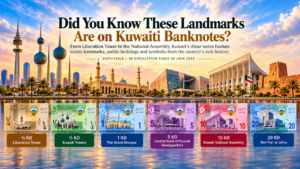
6 Famous Landmarks on Kuwaiti Banknotes | Kuwait Currency Guide 6 Famous Landmarks Featured on Kuwaiti Banknotes Have you ever looked closely at the Kuwaiti dinar notes you use every day? Kuwait’s currency features distinctive designs that reflect the country’s architecture, national institutions, history and cultural identity. The sixth issue of Kuwaiti banknotes entered circulation on 29 June 2014. Explore the six denominations and discover the landmarks and national symbols associated with Kuwait’s currency. Did You Know? Kuwaiti banknotes offer a glimpse into the country’s architecture, heritage, financial institutions and national identity. 1. Quarter Kuwaiti Dinar — Liberation Tower Liberation Tower is one of Kuwait City’s best-known telecommunications landmarks. Its tall structure is a prominent feature of the skyline and represents Kuwait’s modern development. It is also a popular subject in photographs of Kuwait City. Liberation Tower, Kuwait City A prominent telecommunications landmark in Kuwait. Image source and attribution Quarter Kuwaiti Dinar Banknote The quarter-dinar denomination from Kuwait’s sixth banknote issue. Official Central Bank of Kuwait source 2. Half Kuwaiti Dinar — Kuwait Towers Kuwait Towers are among the country’s most recognisable architectural symbols. Located beside the Arabian Gulf, the towers are famous for their distinctive spherical design and panoramic

Read More »
Indian rupee in kuwait
Uncategorized

Indian Rupee in Kuwait: The Untold Story Behind Kuwait’s Currency

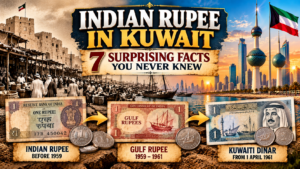
Indian Rupee in Kuwait: 7 Surprising Facts You Never Knew Indian rupee in Kuwait history reveals a fascinating chapter of Gulf trade and monetary change. Before the Kuwaiti Dinar became the country’s national currency, Indian rupees circulated widely in Kuwait. The transition from the Indian rupee to the Gulf Rupee and finally to the Kuwaiti Dinar reflects Kuwait’s transformation from a traditional trading society into a modern state. Old Kuwait market during the historical period when the Indian rupee circulated in Kuwait. Source: Wikimedia Commons. Indian Rupee in Kuwait: The Currency Timeline Before 1959 — Indian Rupee Indian rupees circulated in Kuwait for everyday transactions and regional trade. 1959 — Gulf Rupee Special Gulf Rupee notes were introduced for circulation in Gulf countries. 1960 — Kuwaiti Currency Law Kuwait established the legal framework for its own national currency. 1 April 1961 — Kuwaiti Dinar The first Kuwaiti Dinar entered circulation and replaced the Indian rupee. 1. Why Was the Indian Rupee Used in Kuwait? The Indian rupee in Kuwait became important because Kuwait’s economy was historically connected to maritime trade. Kuwaiti merchants traded with ports around the Arabian Gulf, India and the wider Indian Ocean. Before the discovery of large-scale

Read More »