

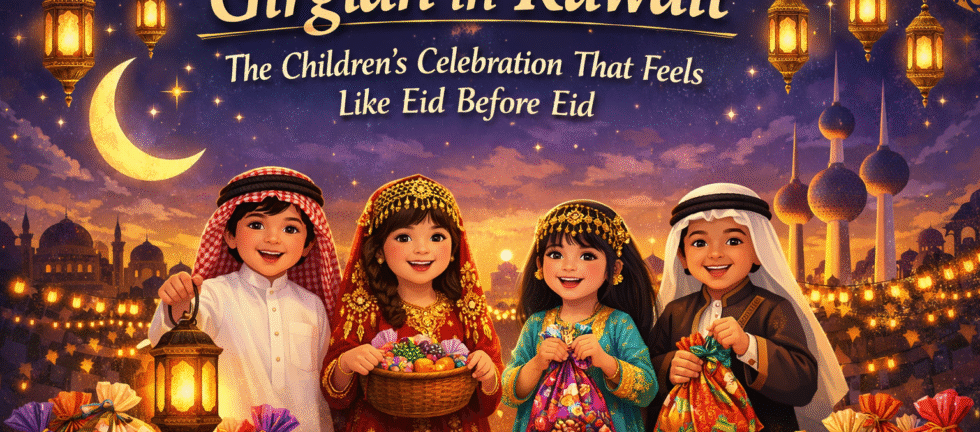
In Kuwait, the holy month of Ramadan is filled with spiritual reflection, family gatherings, and beautiful traditions that have been passed down through generations. Among these traditions, Girgian holds a very special place, especially in the hearts of children. Often described as the “children’s Eid,” Girgian brings excitement, laughter, and community spirit to neighborhoods during the middle days of Ramadan, creating joyful memories long before Eid Al-Fitr arrives.
Girgian is traditionally celebrated on the 13th, 14th, and 15th nights of Ramadan. During these evenings, children dress in colorful traditional Kuwaiti clothing and walk through their neighborhoods carrying decorative bags. They sing special Girgian songs while knocking on doors, and neighbors happily reward them with sweets, nuts, toys, and small gifts. The streets come alive with cheerful voices, vibrant colors, and the innocence of childhood celebration.
Unlike Eid, which marks the end of Ramadan with prayers, feasts, and family visits, Girgian focuses mainly on children and community interaction during the holy month itself. It is centered around generosity, kindness, and shared happiness — values that strongly reflect the spirit of Ramadan.
For many families in Kuwait, Girgian feels like a preview of Eid celebrations. Children eagerly wait for the occasion, just as they wait for Eid clothes and gifts. Parents prepare traditional outfits, decorate treat bags, and fill their homes with sweets to distribute to visiting children. The anticipation, preparation, and excitement closely resemble the joyful atmosphere experienced during Eid.
Historically, Girgian is believed to have originated as a way to encourage children who had successfully fasted for part of Ramadan, rewarding them with treats and recognition. Over time, it evolved into a cultural celebration that connects generations and strengthens community bonds. Today, it remains one of the most beloved traditions in Kuwait and across the Gulf region.
What makes Girgian particularly meaningful is the sense of unity it creates. Neighbors open their doors to children, families gather outdoors, and communities celebrate together. In modern Kuwait, schools, malls, and organizations also host Girgian events, blending traditional customs with contemporary celebrations. Despite modernization, the essence of the tradition — generosity and joy — remains unchanged.
For children, Girgian is more than just collecting sweets. It teaches important life values such as sharing, gratitude, and cultural identity. Dressing in traditional clothes helps them connect with Kuwaiti heritage, while interacting with neighbors builds confidence and social bonds. These experiences create memories that stay with them long into adulthood.
Parents often describe Girgian as one of the most magical nights of Ramadan because it allows children to experience happiness in a way that is deeply rooted in culture. The laughter echoing through neighborhoods, the excitement of filled treat bags, and the warmth of community hospitality all contribute to an atmosphere that truly feels like Eid arriving early.
As Kuwait continues to grow and modernize, traditions like Girgian remain essential in preserving cultural identity. They remind younger generations of the importance of heritage, family connection, and generosity — values that define both Ramadan and Eid.
In many ways, Girgian is not just a celebration; it is an emotional bridge between the spiritual journey of Ramadan and the joyful celebration of Eid. It captures the innocence of childhood, the generosity of community, and the timeless beauty of Kuwaiti culture — making it a cherished tradition that continues to shine year after year.