

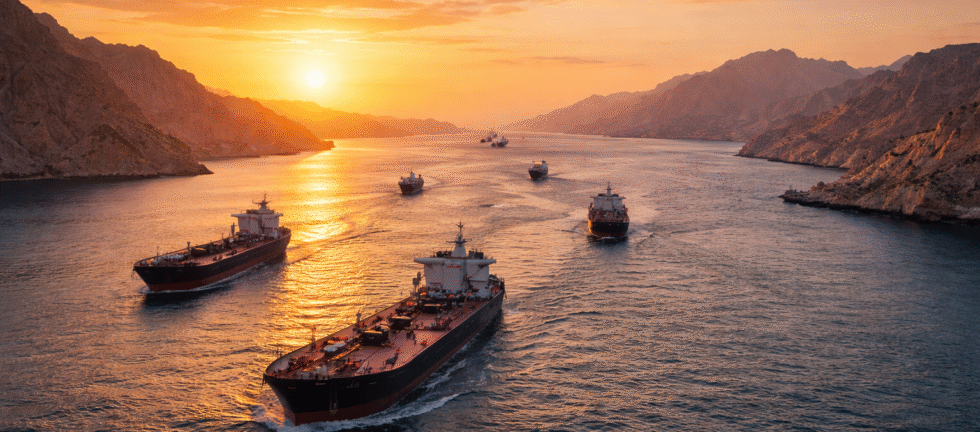
Have you ever noticed how some of the most important places in the world are also the smallest?
The Strait of Hormuz is one of them.
At first glance, it is simply a narrow stretch of water between Iran and Oman. But this thin maritime corridor holds enormous importance for the global economy. In fact, many energy experts consider it the most critical oil chokepoint in the world.
Every day, massive oil tankers travel through this narrow passage carrying energy supplies from the Gulf to markets across Asia, Europe, and North America. It is estimated that nearly one-fifth of the world’s oil consumption passes through this route, making the strait a lifeline for global energy trade.
That is why whenever tensions rise in this region, the entire world pays attention.
Why the Strait of Hormuz Is So Important
To understand its importance, imagine a highway that carries a significant portion of the world’s energy supply.
Now imagine that highway narrowing to a point only about 33 kilometers wide at its narrowest section.
That is essentially what the Strait of Hormuz is.
Oil from countries like Saudi Arabia, Iraq, the UAE, Kuwait, and Qatar must pass through this narrow channel before reaching international markets. Liquefied natural gas shipments—especially from Qatar—also rely heavily on this route.
Because of this concentration of energy traffic, any disruption in the strait can quickly ripple through global markets.
When shipping slows down or becomes risky, oil prices react almost immediately. Energy costs increase, transportation becomes more expensive, and eventually consumers around the world feel the impact.
In other words, what happens in this small waterway does not stay there.
Rising Tensions in the Region
Recently, the Strait of Hormuz has once again become a focal point of international concern due to escalating tensions involving Iran and Israel.
Military confrontations, missile launches, and drone activity linked to the conflict have heightened fears about the safety of shipping routes in the Gulf. Even when the strait remains technically open, the perception of risk can be enough to disrupt maritime traffic.
Shipping companies and insurers closely monitor the security situation in the region. If risks increase, insurance premiums for oil tankers rise dramatically. Some vessels may even delay or reroute journeys to avoid potential danger.
These reactions alone can slow down global energy flows.
Global Economic Consequences
Because the Strait of Hormuz plays such a central role in energy supply, tensions there quickly affect international markets.
Oil prices tend to spike whenever the possibility of disruption emerges. Investors, governments, and industries all watch developments closely because even a temporary closure or conflict could significantly impact supply chains.
Higher oil prices do not just affect fuel costs.
They influence airline ticket prices, shipping rates, manufacturing costs, and even food prices in many parts of the world. Energy is deeply tied to almost every sector of the global economy.
That is why policymakers and global institutions monitor the stability of the strait so carefully.
Strategic Importance Beyond Energy
The significance of the Strait of Hormuz is not limited to oil alone.
The waterway is also a key strategic corridor for international maritime trade and military presence. Naval forces from multiple countries patrol the region to ensure freedom of navigation and to prevent disruptions.
Maintaining stability in this area has become a major priority for global security.
Any prolonged instability could have far-reaching consequences not just for the Gulf region, but for economies around the world.
A Reminder of Global Interdependence
One of the most fascinating aspects of the Strait of Hormuz is how it highlights the interconnected nature of our modern world.
A narrow passage of water in the Middle East can influence fuel prices in Europe, shipping costs in Asia, and economic conditions in North America.
This level of interdependence is a defining feature of today’s global economy.
It also explains why developments in the Gulf are followed closely by governments, financial markets, and industries across the planet.
A Small Passage With Enormous Impact
Looking at a map, the Strait of Hormuz might appear like a thin line separating landmasses.
Yet behind that thin line lies one of the most vital arteries of global energy supply.
Its stability affects oil markets, global trade, and economic security far beyond the region.
As geopolitical tensions continue to shape international relations, the world will likely keep its eyes firmly fixed on this small but extraordinarily important chokepoint.
Because sometimes, the smallest places carry the greatest global significance.
Follow hussain.hk for more news!