


Indian Rupee in Kuwait: 7 Surprising Facts You Never Knew
Indian rupee in Kuwait history reveals a fascinating chapter
of Gulf trade and monetary change. Before the Kuwaiti Dinar became the
country’s national currency, Indian rupees circulated widely in Kuwait.
The transition from the Indian rupee to the Gulf Rupee and finally to the
Kuwaiti Dinar reflects Kuwait’s transformation from a traditional trading
society into a modern state.

circulated in Kuwait. Source: Wikimedia Commons.
Indian Rupee in Kuwait: The Currency Timeline
Before 1959 — Indian Rupee
Indian rupees circulated in Kuwait for everyday transactions and regional trade.
1959 — Gulf Rupee
Special Gulf Rupee notes were introduced for circulation in Gulf countries.
1960 — Kuwaiti Currency Law
Kuwait established the legal framework for its own national currency.
1 April 1961 — Kuwaiti Dinar
The first Kuwaiti Dinar entered circulation and replaced the Indian rupee.
1. Why Was the Indian Rupee Used in Kuwait?
The Indian rupee in Kuwait became important because Kuwait’s
economy was historically connected to maritime trade. Kuwaiti merchants
traded with ports around the Arabian Gulf, India and the wider Indian Ocean.
Before the discovery of large-scale oil wealth, Kuwait depended heavily on
pearl diving, fishing, shipping and trade. The country’s commercial
relationships with India made the rupee a practical currency for many
transactions.
This period shows that Kuwait’s economic history was international long
before the modern oil economy emerged.
Explore More About Old Kuwait
Want to understand what Kuwait was like before today’s modern skyline?
Read:
Old Kuwait vs New Kuwait: How Life Has Changed
.
2. What Was the Gulf Rupee?
In 1959, India introduced special banknotes known as Gulf Rupees for use in
several Gulf states. These notes were different from ordinary Indian currency
and were intended specifically for circulation outside India.

the introduction of the Kuwaiti Dinar. Source: Wikimedia Commons.
The Gulf Rupee represents an important transition between the older Indian
rupee system and the national currencies that later emerged in the Gulf.
3. When Did Kuwait Decide to Create Its Own Currency?
Kuwait took a major step toward monetary independence in 1960. Amiri Decree
No. 41 of 1960 established the Kuwaiti Currency Board and provided the legal
foundation for the Kuwaiti Dinar.
This decision prepared Kuwait for a major change. Instead of continuing to
depend on currencies originating outside the country, Kuwait would have its
own national currency.
Important Date
1 April 1961
The first issue of the Kuwaiti Dinar entered circulation,
replacing the Indian rupee then circulating in Kuwait.
4. The Kuwaiti Dinar Replaced the Indian Rupee in 1961
The most important date in the history of the
Indian rupee in Kuwait is 1 April 1961.
On that day, Kuwait’s first national banknotes were introduced.
The Central Bank of Kuwait records that the first issue replaced the
Indian rupee then circulating in Kuwait.
The first issue was later withdrawn from circulation in 1982.
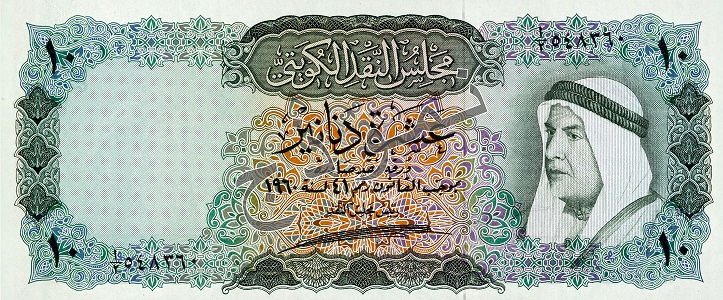
Source: Central Bank of Kuwait.
5. What Denominations Did the First Kuwaiti Dinar Have?
The first Kuwaiti Dinar issue contained five banknote denominations.
| Denomination | Historical Significance |
|---|---|
| ¼ Dinar | Small denomination used for everyday payments. |
| ½ Dinar | Small denomination used for regular transactions. |
| 1 Dinar | Important denomination in the first currency issue. |
| 5 Dinars | Higher-value note used for larger transactions. |
| 10 Dinars | Highest denomination in the first issue. |
6. What Did the First Kuwaiti Dinar Banknotes Show?
The first Kuwaiti Dinar notes were designed to communicate a sense of
national identity. They featured the portrait of Kuwait’s ruler and imagery
connected with the country’s development and traditional life.
Banknotes are more than money. They can also provide a visual record of a
country’s architecture, economy, culture and national identity.
7. What Happened to the Old Indian Rupee in Kuwait?
Once the Kuwaiti Dinar entered circulation, the monetary system in Kuwait
changed permanently. The era of the
Indian rupee in Kuwait came to an end as the national
currency became the Kuwaiti Dinar.
The first Dinar issue was later withdrawn from circulation in 1982.
Indian Rupee → Gulf Rupee → Kuwaiti Dinar
Kuwait Currency History at a Glance
| Period | Currency | Significance |
|---|---|---|
| Before 1959 | Indian Rupee | Used in Kuwait and connected with regional trade. |
| 1959–1961 | Gulf Rupee | Special currency introduced for Gulf circulation. |
| 1961 onward | Kuwaiti Dinar | Kuwait’s national currency. |
How Currency History Connects With Kuwait’s Economic Growth
Currency history cannot be separated from Kuwait’s broader economic
transformation. The country changed dramatically during the twentieth century,
especially after the discovery and development of oil.
Read more:
Oil Changed Everything Overnight: How 1938 Opened Kuwait to the World
The Dinar and Kuwait’s National Identity
The introduction of the Kuwaiti Dinar also happened during a major period of
political change. Kuwait became independent in 1961, the same year the first
Dinar entered circulation.
The currency therefore became one of the visible symbols of Kuwait’s emerging
national identity.
Explore:
10 Ways Kuwait Celebrates National Day
Official Sources and Further Reading
Frequently Asked Questions About Indian Rupee in Kuwait
1. When was the Indian rupee used in Kuwait?
The Indian rupee was used in Kuwait for many years before Kuwait introduced
its own national currency. It was later replaced by Gulf Rupee notes and
eventually the Kuwaiti Dinar.
2. What currency did Kuwait use before the Dinar?
Before the Kuwaiti Dinar, Kuwait used Indian rupees and later Gulf Rupee
notes. The first Kuwaiti Dinar was introduced on 1 April 1961.
3. When did the Gulf Rupee start in Kuwait?
Gulf Rupee notes were introduced in 1959 for use in Gulf countries,
including Kuwait.
4. When did Kuwait introduce the Kuwaiti Dinar?
Kuwait introduced the first issue of the Kuwaiti Dinar on 1 April 1961,
replacing the Indian rupee then circulating in Kuwait.
5. What were the first Kuwaiti Dinar denominations?
The first issue included ¼ Dinar, ½ Dinar, 1 Dinar, 5 Dinars and
10 Dinars.
6. Why is Indian rupee in Kuwait history important?
Indian rupee in Kuwait history shows how Kuwait’s trade connections,
economic development and national identity evolved before the creation
of the modern Kuwaiti currency system.
Conclusion: From Indian Rupee to Kuwaiti Dinar
The history of the Indian rupee in Kuwait is a fascinating
reminder that currencies tell stories about countries.
Kuwait’s earlier dependence on regional trade connected it closely with the
Indian rupee. The Gulf Rupee later provided a currency specifically intended
for Gulf circulation.
Then came the decisive transition. On 1 April 1961, Kuwait introduced the
first Kuwaiti Dinar, giving the country its own national currency.
From traditional markets and maritime trade to oil development and national
institutions, the journey from the Indian rupee to the Kuwaiti Dinar mirrors
Kuwait’s remarkable transformation.
If you enjoy discovering Kuwait’s history, culture and hidden stories,
explore more articles on
HussainHK.com